Final Video

)

Thursday, 7 November 2013

Themes and Styles

What is a Theme?

The theme acts like the overall or underlying idea, it acts as the foundation of a piece of work or art or medium which makes everything within it link to it (Example: Christmas, the things that should be typically seen within the themes would be presents and Santa Clause).


The theme of 'Friends' is to show the friendship between the six characters within the show, this is express by the fact that the opening uses many different clips to create a montage of the characters from different episodes. In the scene one of the characters are usually seen with another character of the six, this really expresses the point that these characters are good friends as they are seen with each other a lot within the montage.

What is a Style?

Styles is the way that the production expresses the way things look under the influence of a theme. 

In this opening for 'Superbad', it uses a lot of visual style, i.e.: the silhouette of the character's dancing with the contrasting colours of their silhouette, the poor transition and very bright and colourful colours. These examples can be associated with the the theme of the 70's however this is a contrast of when the film is meant to be set in but by doing this create enigma codes as it keeps the audience guessing about the film.


Theme and Style Analysis: Dexter


This opening sequence from the TV drama 'Dexter' we are able to see or link what the show will be focusing around. There is many connotation of blood that is seen quite frequently within the sequence, although most of the time it is not blood. The first connotation of blood is seen when a bug (mosquito) is upon the arm of a character, this character hits it, this leaves behind a red substance upon his arm. This can only be associated with blood, the fact that the character does not seem to bothered about the blood on his arm suggest to use that he does not mind blood or enjoy the sight of blood. In another scene in the sequence, the character is seen shaving himself inside his room, after awhile, again another red substances (however this time it is more liquidise than before) starts dripping down his neck and into a sink. The large amount of the use of red connotes blood and death, it further denotes that the character may have a strange interest to blood as it is seen a lot in the sequence. It also helps to tell the the theme of the drama, this drama is about a serial killer who works as a blood analyst. 

This visual style of the red substance helps fit in with the theme of the show as this person is a serial killer and works with blood so is use to the sight of blood and that it is a big part of his life. Later, we see many objects that has the same look and properties of blood, i.e.: the ketchup being red however the way that they express the ketchup is unusual to how we would normally see it, they make it spit and gush out upon the plate, the colour of the ketchup is red and therefore links to the other red substances from previously and plus they don't show that it is ketchup because they do not show the bottle, creates enigma codes as the audience does not know exactly what it is and because they have been expose to the red substances that is most likely blood because of the source of where it comes from consist of blood, the audience will question the fact that if that is ketchup or is it blood. The style that they chose, uses a lot of connotation of blood due to the liquid red substance, to help link with the whole theme of the show and to help the audience understand the sort of things that they are expecting to see from this character.



Monday, 4 November 2013

Preliminary Task and Evaluation

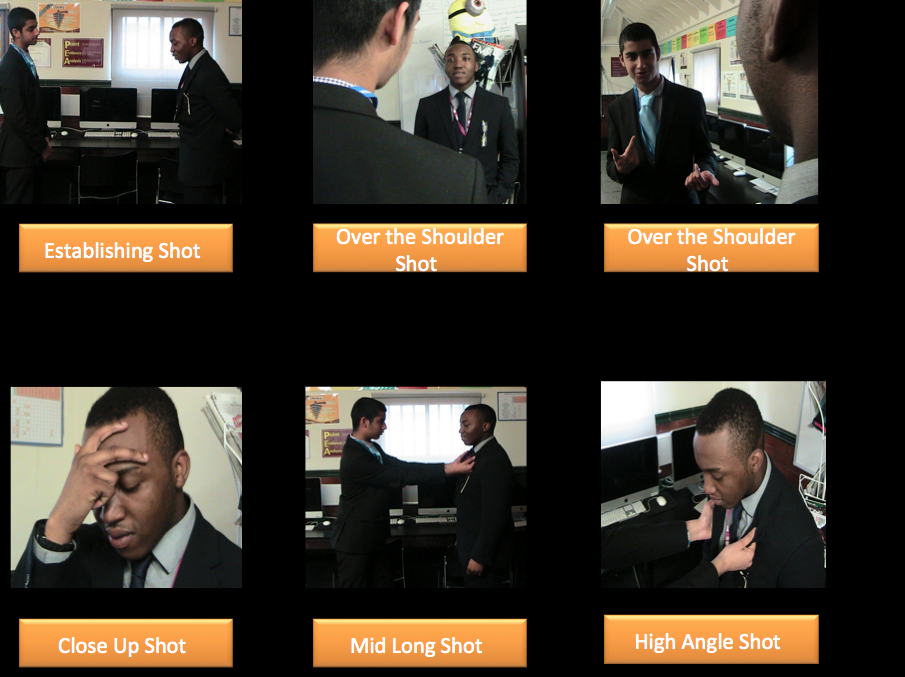
In our As Media class, we were giving a preliminary task to complete. The preliminary task was to: Film a scene which involves a person walking into a room, siting down and having an exchange of dialogue with someone.

We had to plan our scenes on a storyboard with the shot types that will be used in every scene. After creating a storyboard, we then had to make a shot list which had all the different shots that would be used throughout the preliminary task. When we showed our teachers our plans and got their approval, we were allowed to go out and film our scene. We had to work in a group of three, one person who is working the camera and the 2 people who is involved in the exchange of words.

When we managed to get all the footage that we needed then we used Final Cut Express to use all the footage and put them together to create a final production. This is my final production of the preliminary task:


Evaluation:

Overall the whole production went very well, we have not had that much experience with a camera however with the use of the tripod (at times) we were able to record our clips and used Final Cut Express to produce a good video. We did well to use the camera shots that were needed to be seen in this task (Establish shot, Over the shoulder shot, Match on action and Shot, reverse shot) and we did well to obey the rules of the 180 degree rule, making sure that the person who is seen on the left, always stays on the left and never broke the 180 degree rule and moves to the right. We managed to keep a continuity with each scene so that nothing looked out of place and if there was an error then we tried to fix it using Final Cut Express so that it continued to look like a continuity footage. We managed to keep our film mysterious and giving out enigma codes to the audience, this made the film more exciting to watch and more intriguing to the audience.

I believe that the task went well however we did experience some problems while we were filming. The first time we filmed our preliminary task, we broke the 180 degree rule numerous of times which meant that we had to re-film the scenes where we broke the 180 degree rule. On the day of the re-film, one of the actors was not in; leaving only two people to do everything and at a result of the absent meant that the camera man had to become an actor and we had to re-film the whole preliminary task over again. This took up a lot of our editing time, but we managed to re-film and edit before deadline day. While we were recording the first run of the preliminary task, we kept rewinding the tape which caused problems for the uploading and took more time from our editing as we had to wait for the clips to come before we could edit.

Although we had problems with our productions, we managed to get everything done, sticking to our plans that we made, the shot types we said we were going to use and managed to get the re-film and editing on time. We have learnt how to keep inside the 180 degree and how to break it and we also learnt to not rewind the tapes in the camera as it cause problems when it came to uploading. Using what we have learnt will help us later in our As Media classes when we are faced with similar tasks. 


Wednesday, 23 October 2013

Continuity Task


Continuity Task

In this task we were given a selection of different clips that we were told to edit and make it a continuous scene. Using the year 13's clips and Final Cut Express, I was able to use the clips to make a continuous scene.


From this task, I have learnt that it is important that when filming you should keep everything the way it was set, such as props and lighting. This is important as it make the scene look more realistic so by changing these factors around could cause confusion to arise and take the continuity away making it seem obvious that the shots may have been done at complete different times, therefore taking away the realism of that scene. This task will help me plan out my future filming work better as it has allowed me to see what different editing techniques and shots is best to use to show continuity within a scene (I.e.: Match on Action and Shot reverse shot). It also has helped me to use different clips to make a film seem like it is continuous by using simple editing techniques. It has helped me to recognise where the 180 degree rule has been broken and by doing this will allow me to abide by its rule in my filming so that it makes sense to the audience and does not ruin the continuity of the filming.

Tuesday, 22 October 2013

Editing Practical - CSI: South Norwood

CSI: South Norwood


CSI: MIAMI OPENING

In this task, we were shown a CSI opening like the one above, then we were told to create a opening scene like CSI. Given many different clips to add while using the clips we recorded within the lesson, I was able to create an opening by fusing the clips together and adding text to the clips.

CSI: SOUTH NORWOOD

From this task, I was able to get a bit of an understanding of how an opening/title scene should look like, what is required of  an opening to make it more effective to the audience. To make an effective opening it is important to make sure that the opening flows smoothly so the editing must be good, the visual looks well placed and in sync to the audio that may be playing in the background. Another aspect that makes an opening effective would be the text, the text must be able to be read clearly so when making an title/opening sequence it is important to think about the typography, how will it look with the visual, how much of the screen does it take up, how will the colours of the text match the background and still able to be seen. The last thing that make a opening effective is the way in which they create enigma codes, enigma codes really make the audience think about what they see and what they expect to see and makes the audience intrigued to watch the media product.


Wednesday, 2 October 2013

180 Degree Rule


180 Degree Rule

What is the 180 degree rule?

The 180 degree rule is when the camera keeps the characters on the same side where ever it may be on the 180 degree side. If camera exceeds the 180 degree side then it has broken the rule as the character will be  on the opposite side of what they were before.

Why is it important to use this rule?

The 180 degree rule is important so that the audience does not get confused. It makes it easier to follow the character as they stay within the position they were set in. If the 180 degree rule is broken then the character move from their previous position, this make it harder to track down and will become very confusing if the character keep breaking and going back to the 180 degree. 

How do you change direction?


In the 180 degree rule, the camera must stay within the '180 degree area', where ever the camera is in the area it will keep the characters in the right position (The red chess piece will always be upon the left side whereas the blue will be on the right, when ever the camera changes within the area 


How will this impact on your planning for your preliminary task?

This rule is very important when it comes to planning our preliminary task as the task consist of two characters exchanging dialogue to one another.The 180 Degree Rule is important in a scene like this as it is very important that the characters stay in their correct position. While planning we should take into consideration of the 180 Degree Rule when plotting the camera for each scene, trying not to break the 180 Degree Rule so that the audience do no get too confused on where the characters are meant to be position. Getting it right in the plan will reduce the time that is spent trying to keep in the 180 Degree area, which means less time on recording constantly.

Sunday, 29 September 2013

Narrative Theory


Narrative Theory

In As Media, we have been investigating into the world of narration and stories. We have looked at the differences between a 'Narrative' and a 'Story' and how a story is set out. We learnt how these stories are set out by looking into 5 different theories from 5 different theorist.

Narrative: The way in which a story is meant to be told. It is an organised way of how the story will be told by or how something is set out to be.

Story: A sequence of events which is know correctly as the plot.

How to analyse a Narrative?

When analysing a narrative, we analyse the construction of the story (i.e.: the way it has been put together, not the story itself). You also need to consider what the story is about in its most basic term, the 'Theme'.

Narrative Theories

Theory 1: 
Tzvetan Todorov
Tzvetan Todorov


Tzvetan Todorov believed that a story is always told in the same 5 order:


Equilibrium- where everything is balanced or at the normal

Disequilibrium- Something comes along to disrupt the equilibrium

Recognition of disruption- Something or someone notices the problem

Attempt to repair disruption- Something or someone does something to try and solve the problem

Resolution/ New equilibrium- Start of a new equilibrium or back to the normal 


Theory 2: 
Syd Field


Syd Field believed that a story is made out of 3 act and within each act there are parts, in act 1 it is 'Set-Up', Act 2 is the 'Confrontation' and act 3 the 'Resolution'. Also in this paradigm there are two plot points, these plot points change the plot of the story into another direction.


Act 1:

This part of the story introduces the main character, the dramatic premise, and the dramatic situation.
Main character- the person in the story who has a need/objective to fulfill and whose actions drive the story 
Dramatic premise- what the story is about 
Dramatic situation- the circumstances surrounding the action
Act 2:

Obstacles--In the second act, the main character encounters obstacle after obstacle that prevent him from achieving his dramatic need.

First Culmination--a point just before the halfway point of the film where the main character seems close to achieving his or her goal/objective. Then, everything falls apart, leading to the midpoint.

Midpoint--a point approximately halfway through the film where the main character reaches his/her lowest point and seems furthest from fulfilling the dramatic need or objective.

Act 3:

Climax (Second Culmination)--The point at which the plot reaches its maximum tension and the forces in opposition confront each other at a peak of physical or emotional action.

Denouement--The brief period of calm at the end of a film where a state of equilibrium returns.


Theory 3: 
Vladimir Propp

Vladimir says that each story will always have 8 character types in the story, these character types are:

The Hero- leads the narrative, usually looking for something 


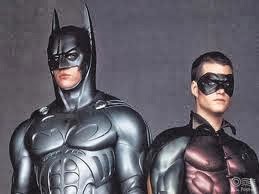
(Batman)


The Villain- Conflict with the hero, they always try to stop them 


(Joker from Batman)


The Donor- Gives the hero something to help them to complete the quest 


(Uncle Ben from Spider-man)


The Princess- Prize or reward for the hero 


(Princess Fiona from Shrek)


The Helper- Helps the hero on his journey, usually in the form of a side-kick 


(Robin from Batman)


The Princess' Father- Offers a reward to the hero

(The Sultan)

The False Hero- Takes credit for the hero's actions or tries to marry the princess


(Prince Charming from Shrek)


The Dispatcher- Character who sends the hero on his journey

(Lord farquaad from Shrek)

Theory 4: 
Claude Levi- Strauss


Claude believes that every story is set around a 'Binary Oppositions'. A Binary Oppositions is a conflict between two qualities or terms (i.e.: Good vs Evil, Boy vs Girls, etc), Every story must have a binary oppositions.

Theory 5: 
Roland Barthes

Roland's theory was that narrative works with five different codes which becomes active to the audience, these codes are:

Action- Narrative device by which a resolution is produced through action (i.e.: Shoot-out)

Enigma- Narrative device that teases the audience by presenting a puzzle or riddle to be solved. Works to delay the story's ending pleasurably

Symbolic- Connotation, the descriptions that is linked or associated with specific symbols

Semantic- Denotation, the meaning that is linked or associated with the narrative

Cultural- Narrative device which the audience can recognise as being part of a culture (i.e.: a 'made man' in a gangster film is part of the mafia culture).


Jelly Babies:
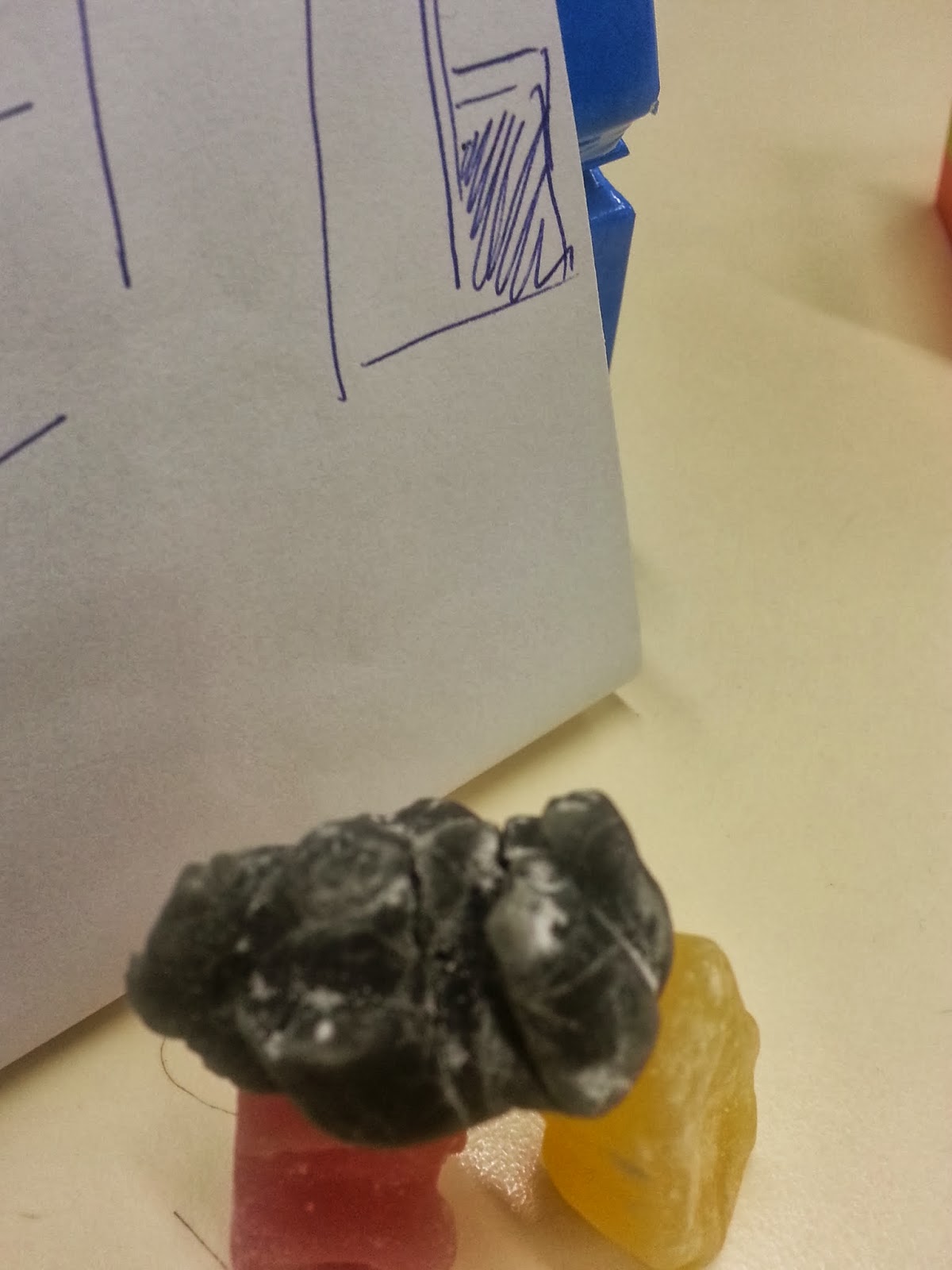
Looking into these narrative theory, mainly focusing on Tzvetan Todorov's theory, we wanted to create our own little story and use each dilemma of Tzvetan Todorov's theory within it. These jelly babies will tell a story by using Todorov's theory: An Equilibrium, Disequilibrium, New equilibrium.


4 jelly babies friends, happily enjoying each others company


One day, the black jelly baby got fed up with rest of the jelly babies


The black jelly baby isolated himself from everyone


In the night the black jelly baby went back to the city to kidnap one of his former friends.


The orange jelly baby is taken by the black one to his hideout


 The black jelly baby eats the orange jelly baby's head


The orange jelly baby's friends find their friend's corpse


The other jelly babies find the black jelly baby sleeping


The jelly babies eat the black jelly baby's head off and carry his corpse away